But tohorā are recovering, making Aotearoa home to one of the healthiest right whale population on Earth. It’s a comeback that shows why protecting a living ocean is a powerful climate tool.
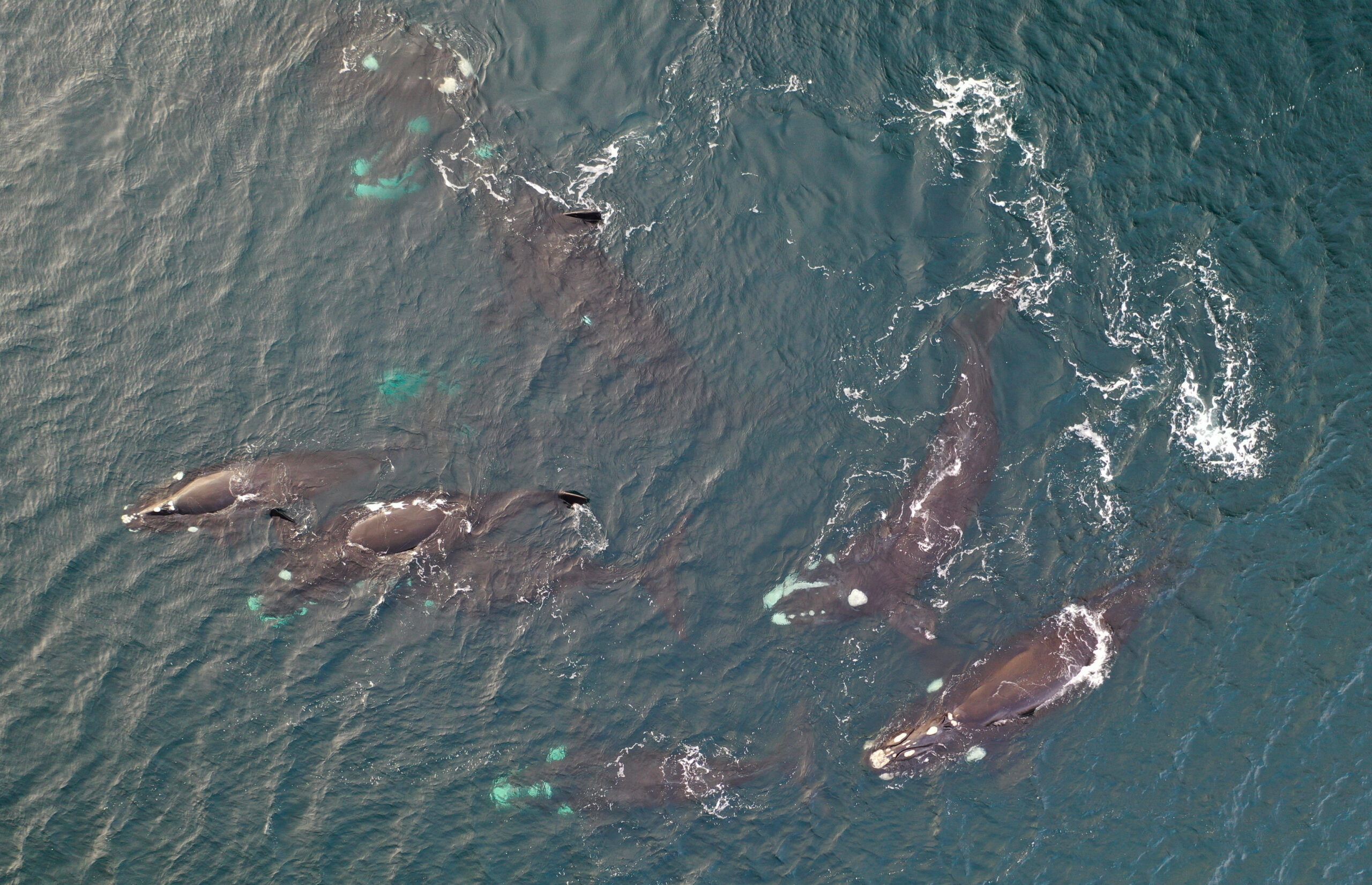
Tohorā southern right whales may be surprising climate allies, IMF economists say – they fertilise carbon-capturing phytoplankton and lock away CO₂ when they sink to the seafloor.
Whaling switched much of this off, cutting great whale numbers to around 1.3 million today.
But tohorā are recovering, making Aotearoa home to one of the healthiest right whale population on Earth. It’s a comeback that shows why protecting a living ocean is a powerful climate tool.
When we think about tackling climate change, we picture land-based initiatives like wind farms, electric cars and forests of newly planted trees. We don’t usually picture a 40-tonne whale. But according to a group of economists writing for the International Monetary Fund, we probably should.
Their argument is simple and surprising: whales are some of the hardest-working climate allies on the planet – and protecting them is one of the cheapest, lowest-tech climate strategies available. For tohorā, the southern right whale and their steady post-whaling population rebound, that changes the story completely. Their comeback and future protection isn’t just good news for a species. It’s good news for the climate.
Here’s how it works.
Whales fight climate change in two ways – and neither is obvious
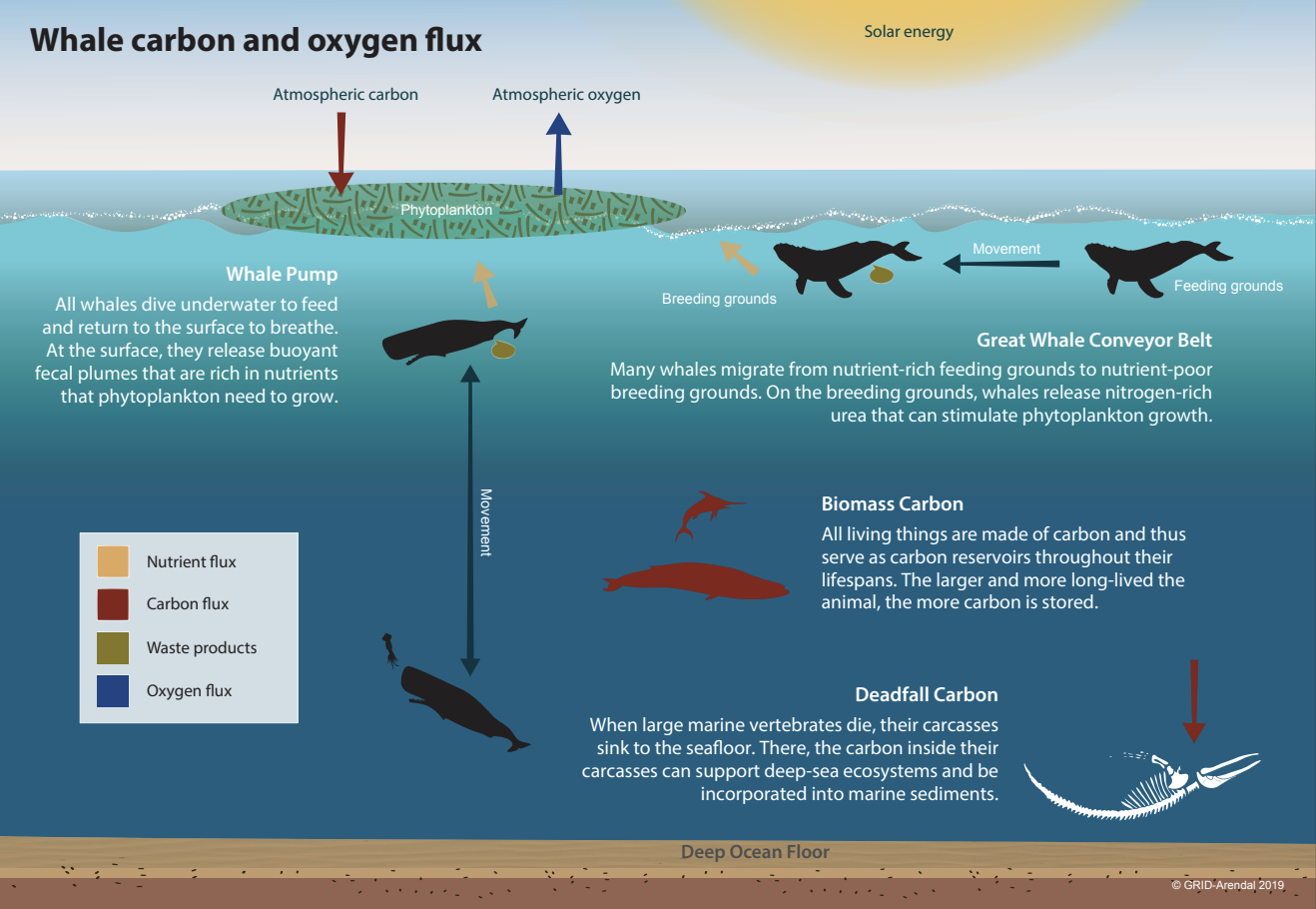
Whales feed in the deep ocean and then release nutrient-rich waste near the surface – a plume loaded with iron and nitrogen. That’s fertiliser for phytoplankton: microscopic ocean plants that, like plants on land, soak up carbon as they grow. Scientists call this the “whale pump,” and it’s part of what makes whales the gardeners of the sea, feeding the smallest life in the moana as they move through it.
Phytoplankton are no small crop. They capture around 40% of all the CO₂ produced on Earth – the work of four Amazon rainforests. And the researchers estimate that if whale activity lifted phytoplankton numbers by even 1%, it would be like planting two billion mature trees. Overnight.
As a great whale grows, carbon builds up in its enormous body. When it dies, it sinks to the deep seafloor – a “whale fall” – carrying an average of 33 tonnes of CO₂ down with it, out of the atmosphere for hundreds of years. For scale, a single tree absorbs up to about 22 kilograms of CO₂ a year. One whale is a carbon store that a forest would take a very long time to match.
For centuries, whaling didn’t just take whales. It quietly removed one of the ocean’s great carbon-drawing forces. Before industrial whaling there were an estimated four to five million great whales in the ocean. Today there are around 1.3 million – and some species, like the blue whale, sit at roughly 3% of their former numbers.
Bringing whales back helps the moana breathe a little easier again. The economists behind the study even put a figure on it, valuing the carbon and ecosystem services of a single great whale at more than US$2 million – and argue that protecting whales deserves to sit alongside the technologies we’re spending billions on to pull carbon from the sky.
Southern right whales were hunted from an estimated 30,000 in New Zealand waters down to around 40 by 1920. Today, thanks to an international hunting ban and a safe sub-Antarctic nursery in the Maungahuka Auckland Islands, there are roughly 2,000 – and Aotearoa now hosts the healthiest right whale population on Earth.
Seen through the lens of this research, that recovery is more than a biodiversity success story. It’s the living carbon web knitting itself back together: carbon-tending giants returning to the moana, quietly doing climate work that no machine can replicate.
It also reframes what protection is for. Keeping shipping and fishing clear of the places tohorā feed and breed, and pushing back on activities like bottom trawling and seabed mining that destroy the productive seafloor, isn’t only about saving a charismatic animal. It’s about keeping one of the planet’s natural climate allies alive and working.
A living ocean is one of the most powerful climate tools we have – and tohorā are proof of what it can do when we give it room to recover.
The science in this piece draws on Chami, R., Cosimano, T., Fullenkamp, C., & Oztosun, S. (2019), “Nature’s Solution to Climate Change,” published in the IMF’s Finance & Development magazine. Read here.
The dollar valuations and the estimate of phytoplankton’s response to whale activity are the authors’ modelled figures – a compelling case that the science continues to refine.

We’re on a mission to create 1,000 postcards to protect the Hauraki Gulf and we need your help.
Send us your favourite ocean photo and a few words about what you love most about the Gulf, and together, we’ll spotlight why the Gulf deserves urgent protection – for us, and for future generations.