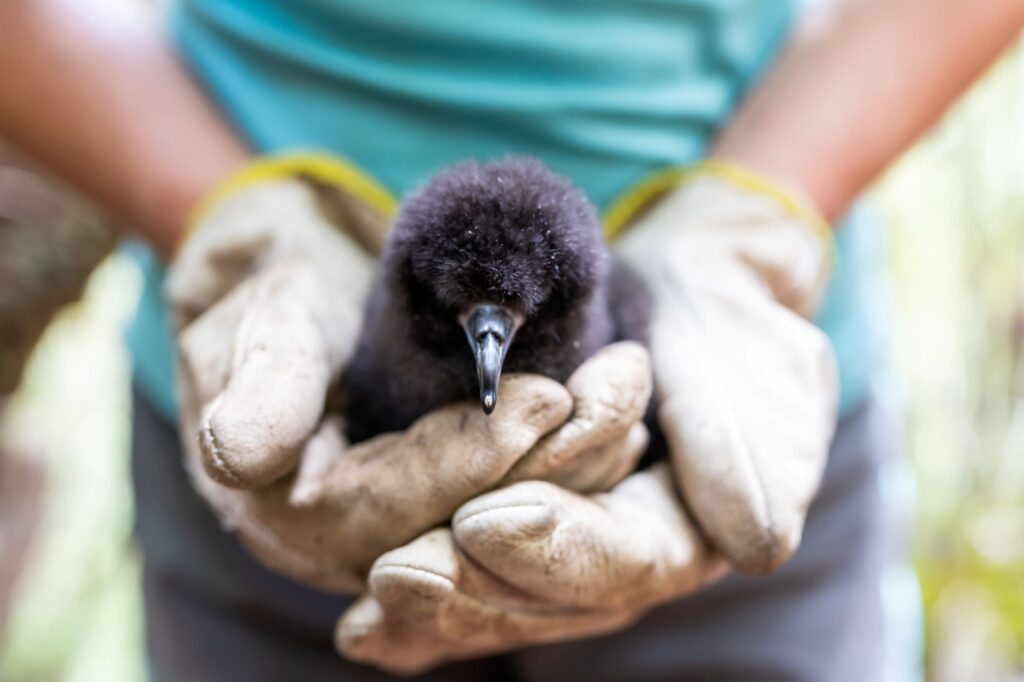
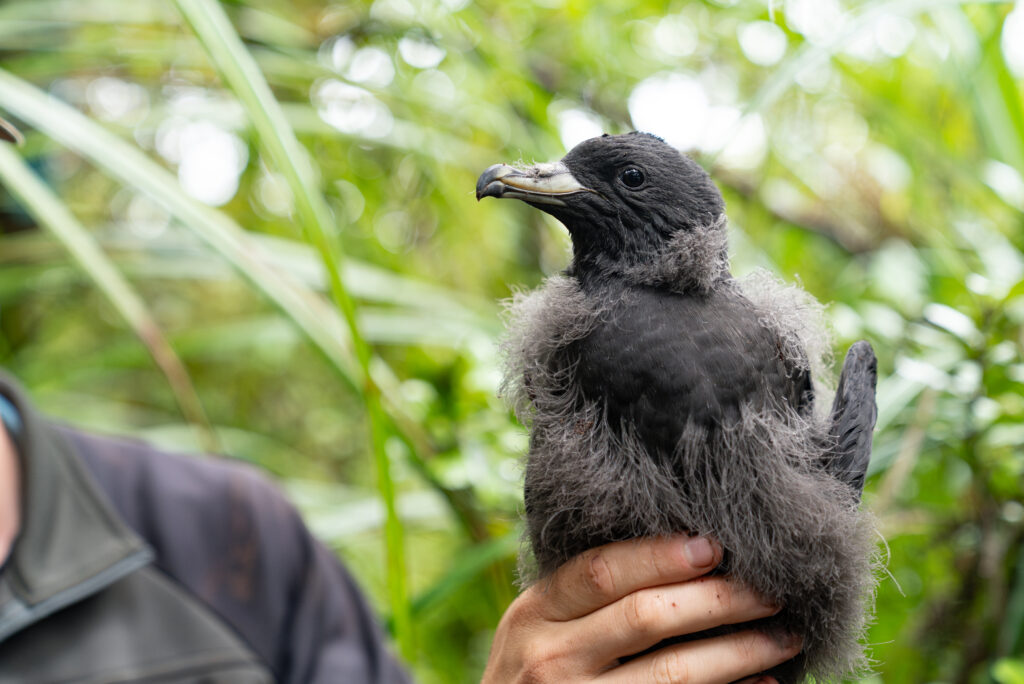
The results offer hope for species like the Tōroa Antipodean albatross, whose biggest threat is drowning on hooks baited for tuna, as international fleets are encouraged to adopt the same measures.
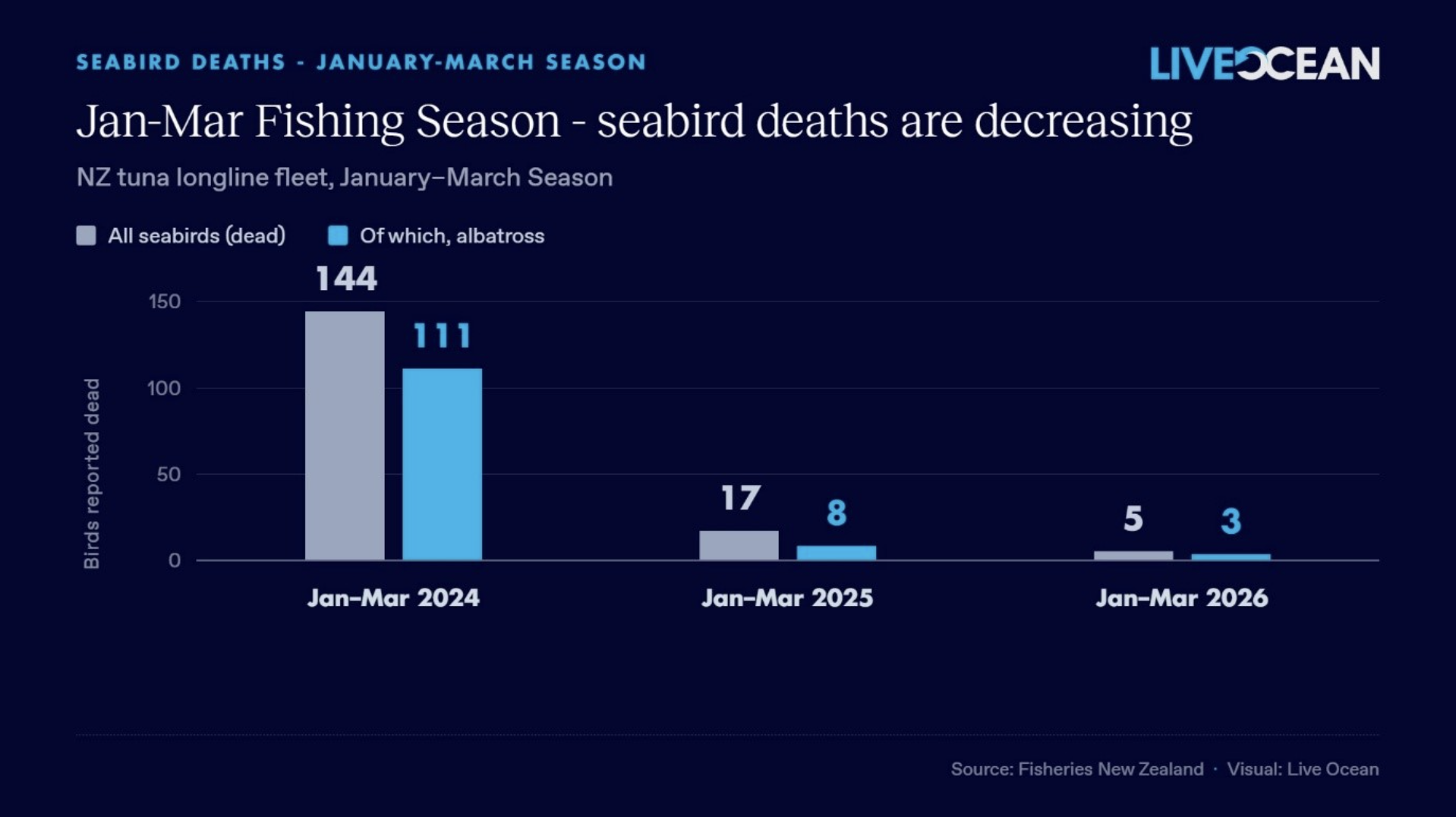
Seabird deaths in New Zealand’s surface tuna longline fleet have dropped sharply since protective measures became mandatory in 2024, falling from 144 in early 2024 to just 5 in the same period this year – including a drop from 111 to 3 for at-risk albatrosses.
Live Ocean welcomes the early signs as encouraging news for the seabird capital of the world.
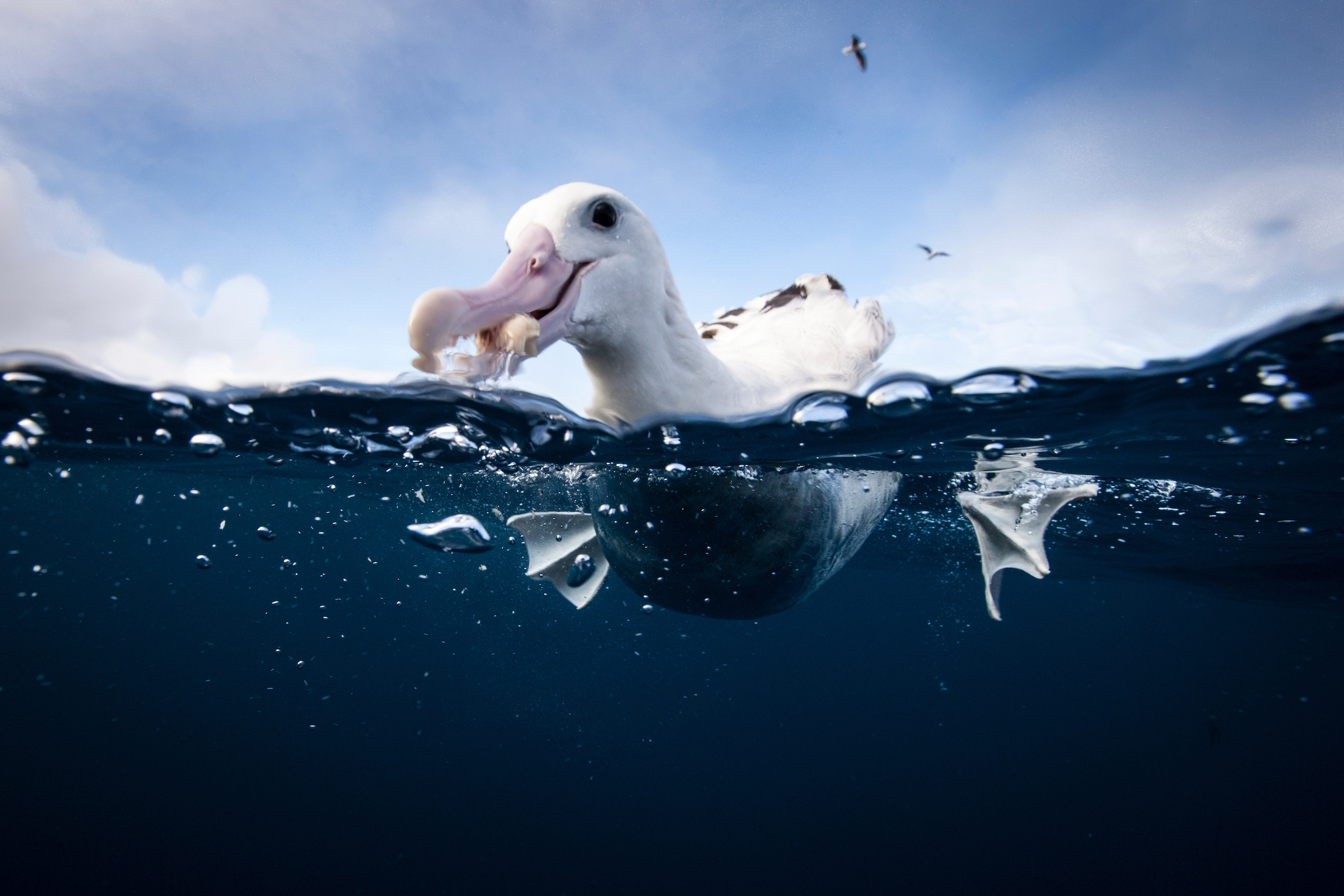
The results offer hope for species like the Tōroa Antipodean albatross, whose biggest threat is drowning on hooks baited for tuna, as international fleets are encouraged to adopt the same measures.
New quarterly reporting from Fisheries New Zealand shows seabird deaths in the tuna longline fleet falling from 144 in January to March 2024, down to 17 in January to March 2025 further reducing to just 5 in the same period this year. That includes a drop from 111 to 3 for albatrosses, that are among the birds most at risk, across the two-year period.
It’s worth noting that two fishing seasons is a short run of data, and changes in fleet size and reporting practices can make longer-term trends difficult to determine, however these early results are really encouraging.
“For a nation that is home to more seabird and albatross species than anywhere else in the world, this is really welcome news. We have a responsibility to give these extraordinary birds the best chance of survival, and it’s encouraging to see signs that changes made here in New Zealand are making a difference,” says Rosalie Nelson, Chief Executive Live Ocean.
New Zealand is the seabird capital of the world – and the albatross capital, too. Of the 22 albatross species worldwide, 17 are found in New Zealand waters, and 13 breed here – yet 90 percent of our seabirds are already threatened or at risk of extinction, largely from human impacts, including captures in commercial fisheries.
Since 2019, Live Ocean has supported the scientists and experts working to reverse the decline of the Tōroa Antipodean albatross because they’re on the fast track to extinction. 2,300 of these birds are being lost each year and their #1 threat is drowning on hooks baited to catch tuna.
Live Ocean has helped raise awareness of the plight of the species’, which breeds only in the New Zealand sub-Antarctic, as a symbol for the threat many seabirds face at sea. We’ve raised funds for satellite trackers, supporting a scientific voyage to their breeding site on the Antipodes Islands and co-funded a toolkit to help longline fishing fleets across the globe improve their seabird safe practices.
With these new mandatory measures now showing positive impact across New Zealand’s tuna longline fleet, and international fleets being encouraged to adopt the same simple measures, there’s hope that the Antipodean albatross won’t be lost forever.

We’re on a mission to create 1,000 postcards to protect the Hauraki Gulf and we need your help.
Send us your favourite ocean photo and a few words about what you love most about the Gulf, and together, we’ll spotlight why the Gulf deserves urgent protection – for us, and for future generations.