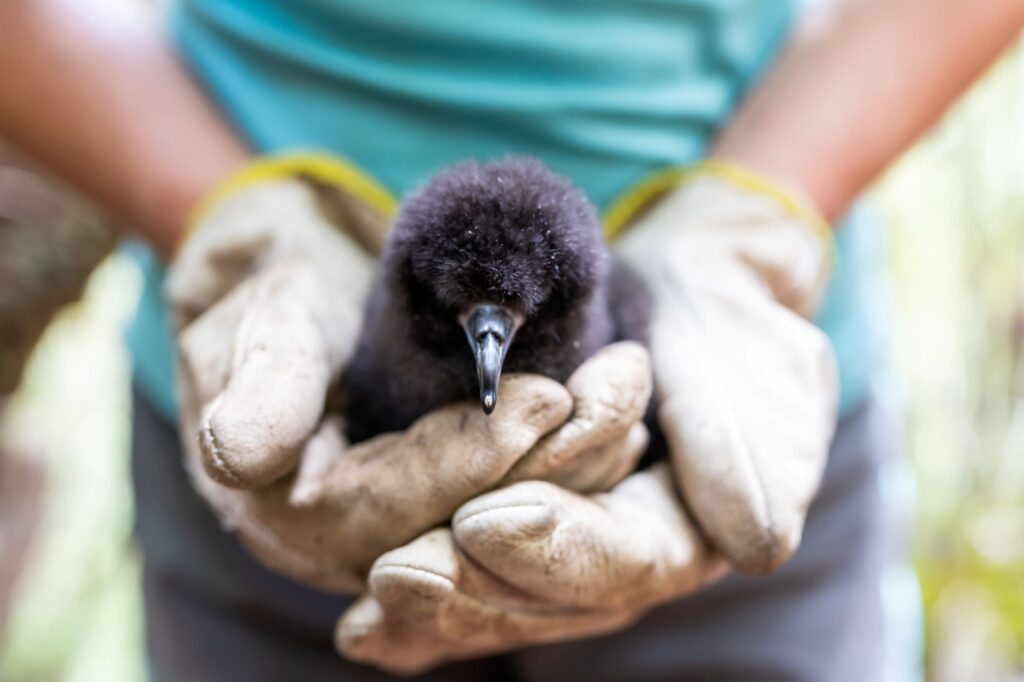
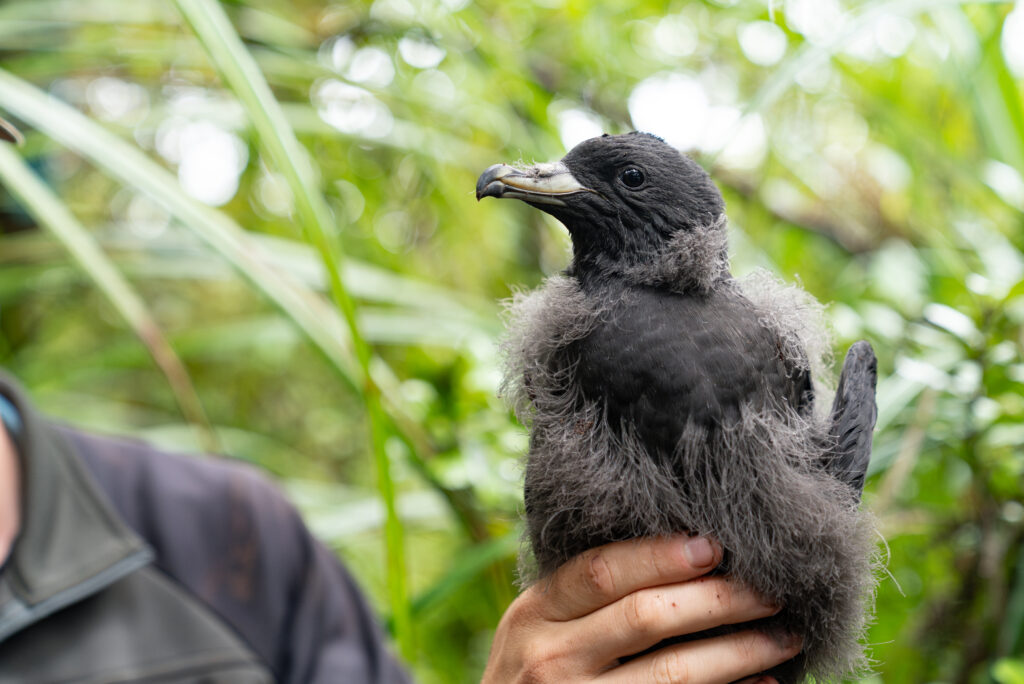
With just 5,000 breeding pairs left and fewer than 10% of fledglings returning home, the campaign builds the case for protecting one of New Zealand’s most underrated endurance athletes.
Largest-ever black petrel satellite tracking study reveals surprises as tākoketai takes flight for Bird of the Year
By Live Ocean
3 September '26
Read time: 3 min
Article Summary
Main Points
Live Ocean Foundation has launched its ‘Back the Bird in Black’ Bird of the Year campaign for tākoketai black petrel, after satellite trackers on 47 fledglings revealed some flying up to 26,000km to reach their feeding grounds off Ecuador.
The research offers a first-time window into where these threatened birds go and the risks they face: light pollution, warming oceans, and fishing bycatch.
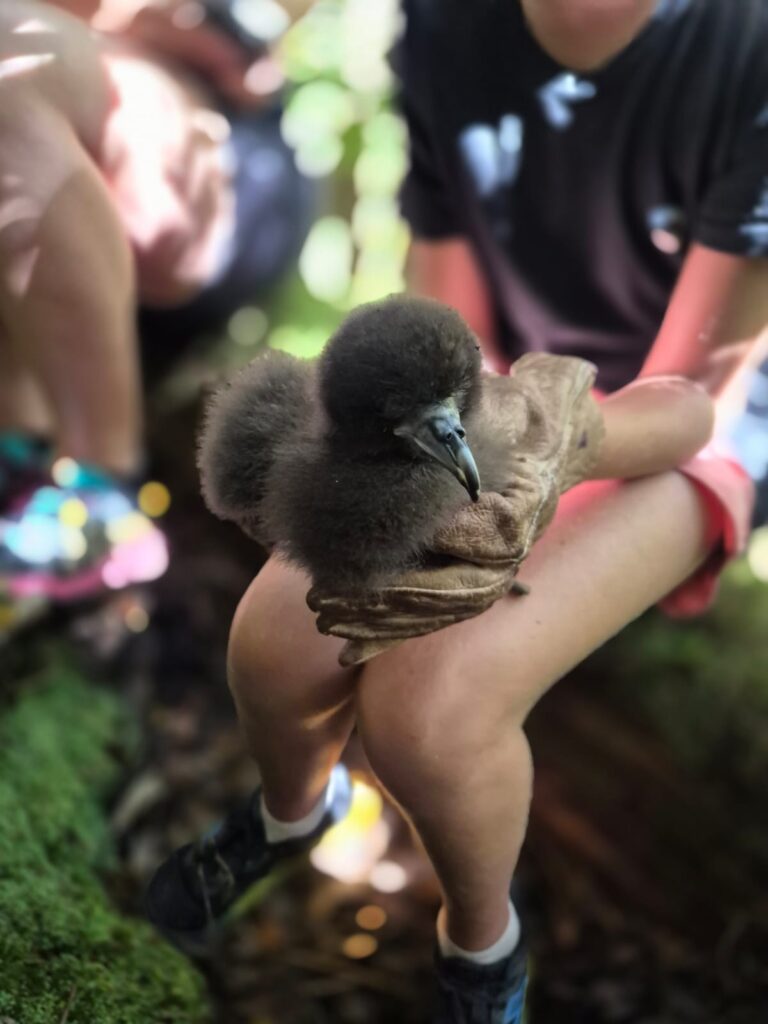
Young tākoketai black petrel fledglings have surprised researchers by flying up to 26,000km and as far north as Mexico over three months, with some birds taking massive detours on their migration to Ecuador.
The rare insights come as Live Ocean Foundation launches its ‘Back the Bird in Black’ Bird of the Year campaign for tākoketai, championing the black petrel as ‘one of New Zealand’s most underrated endurance athletes’.
In May this year, satellite trackers were fitted to 47 black petrel chicks before they left their burrows at the species’ only remaining breeding grounds, on Aotea Great Barrier Island and Te Hauturu-o-Toi Little Barrier Island, for their migration across the Pacific to waters off Ecuador.
20 of the trackers are solar-powered devices and for the first time both researchers and the public can follow individual fledglings for up to a year. It’s fascinating stuff;
- Tākoketai black petrels fledge at around 3 months of age
- 47 fledglings were fitted with satellite trackers
- It’s around 11,000 km across the Pacific from their Aotearoa burrows to their feeding grounds off Ecuador
- One fledgling (Whitu) flew 26,211km over 94 days
- 13 fledglings (30.2% of those tracked) headed the wrong way across New Zealand – artificial (city) lights can distract them
- Two chicks likely didn’t survive (one crash-landed at Mangawhai Heads, one crash-landed off the Queensland coast).
- Tākoketai black petrels are a threatened species – just 5,000 breeding pairs remain
- Fewer than 10% of fledglings return to their breeding grounds
The study, led by Elizabeth ‘Biz’ Bell of Wildlife Management International Limited (WMIL), with support from Live Ocean Foundation and its funding partners, shows some fledglings reaching latitudes as far north as Mexico, while others remained in the Pacific for longer than predicted.
Bells says; “There’s a huge amount we simply haven’t known about where these birds go and what happens to them once they leave Aotearoa. This tracking is giving us a window into that part of their lives for the first time at this scale and already some of the movements we’re seeing aren’t what we expected.
“Understanding where they go also helps us build a much clearer picture of the risks they face, both here in Aotearoa and across the Pacific.
Three areas are emerging strongly from this research and long-term monitoring:
Artificial Light (‘light pollution’) presents a particular risk for fledglings
City lights can disorient young birds on their migration journeys and this year, around 11 tracked fledglings initially headed west across Aotearoa rather than east into the Pacific.
Climate and ocean conditions are a growing concern
Climate events and adverse weather can affect conditions at breeding colonies, and ocean warming is changing the environment these birds depend on for food. The 2025/26 breeding season recorded the poorest chick success in the long-running monitoring programme, with atrocious weather a big contributor.
Bell says; “The super El Nino is also impacting on their foraging in South American waters – it appears the chicks are outside their normal foraging areas due to extreme sea surface temperatures there. And that’s possibly why they have tracked further north this season.”
Fishing interactions remain a significant threat
Tākoketai range thousands of kilometres across New Zealand and international waters, where they can be attracted to fishing boats, caught on hooks and entangled in nets. Bell’s work includes engaging fishers with research to help build understanding of the species and how to reduce risk of accidental seabird bycatch.
Also, highly pathogenic H5N1 avian influenza is another emerging risk being watched. The disease has affected seabirds and marine mammals in South America, where tākoketai spend part of their lives although there is currently no evidence it has affected this population.
Tākoketai breed only in Aotearoa New Zealand and travel thousands of kilometres across the Pacific, yet fewer than 10% of fledglings are known to return to their breeding grounds.
Live Ocean Foundation CEO Rosalie Nelson says protecting New Zealand’s unique biodiversity is fundamental to a healthy ocean.
“Aotearoa is a global hotspot for seabirds with 54 endemic species, more than any other country. Yet around 90% of our native seabird species are classified as threatened or at risk.
“That’s why Live Ocean partners with researchers working to better understand our seabirds, the threats they face and what they need to survive and thrive.
“Bird of the Year is a chance to put one of our remarkable endemic seabirds in the spotlight. The more New Zealanders know about tākoketai and its extraordinary endurance effort across the Pacific, the stronger the case for protecting it.”
Bell adds; “The ultimate goal is to chart a course for recovery and protection of this on the brink species, so that we might see their return to some former nesting areas.”
A healthy, thriving ocean is vital for a healthy future on the planet, and Live Ocean partners with exceptional marine scientists and innovators for evidence and solutions that drive action for a healthy ocean.