This funding, bringing Hugo’s total to $200,000 alongside support from APL, will help Dr Blain finalise and publish her findings.
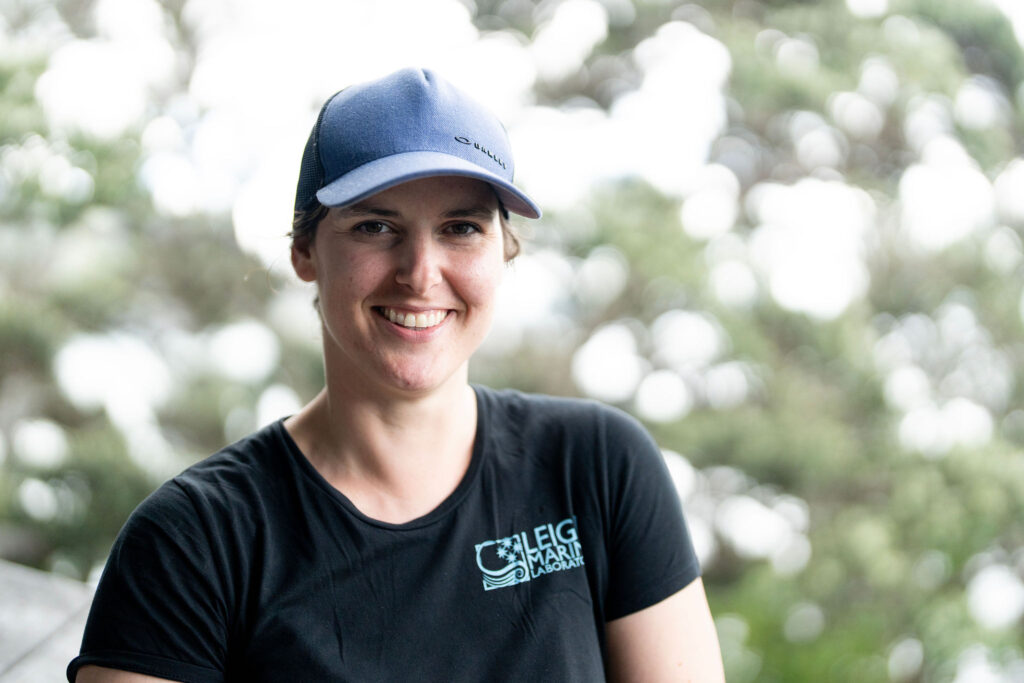
Live Ocean has announced a further $100,000 donation from the Hugo Charitable Trust to support Dr Caitlin Blain’s kelp carbon research.
Her University of Auckland fellowship has shown that healthy kelp forests draw down significantly more carbon dioxide than degraded, urchin-dominated reefs.
This funding, bringing Hugo’s total to $200,000 alongside support from APL, will help Dr Blain finalise and publish her findings.
Over the past three years, Live Ocean and a group of aligned funders, including APL, have backed Dr Blain’s Kelp Carbon Fellowship, funding fieldwork and laboratory research based at the University of Auckland’s Leigh Marine Laboratory.
That work has produced significant new evidence showing how carbon is captured, released, transformed and transported through kelp forests, and how these processes change as ecosystems are degraded or recover. This includes findings that healthy kelp forests draw down significantly more carbon dioxide than degraded reefs dominated by sea urchins, helping position Aotearoa New Zealand at the forefront of global kelp carbon science.
This is Hugo Charitable Trust’s second donation to the project, following an initial $100,000 gift in 2024 – bringing its total investment in Dr Blain’s research to $200,000.
APL, another key supporter of Dr Blain’s research work.
With the research phase now largely complete, this continued funding from Hugo Charitable Trust and further support from APL will allow Dr Blain to dedicate the next phase of her work to finalising and publishing a series of scientific papers, bringing together years of field and laboratory research into a coherent body of peer-reviewed evidence on how kelp forests capture and cycle carbon, how that carbon supports wider ecosystem function, and what this means for kelp forest protection and restoration in New Zealand and around the world.
This ongoing support from Hugo Charitable Trust adds to a growing family of supporters whose collective backing enables Live Ocean’s partnership-led approach – funding ambitious, science-led ocean initiatives like Dr Blain’s.
“The support means I can bring together several years of research into a much more complete picture of what happens to carbon captured by kelp forests,” says Dr Blain.
“Carbon can support marine food webs and nutrient cycling, be transported into other ecosystems, or contribute to long-term storage. Understanding those pathways is critical if we want to understand the true value of kelp forests, and how protecting and restoring them can deliver the greatest benefits. I’m incredibly grateful to Hugo Charitable Trust, APL and Live Ocean for supporting us through to this important final stage.”
Live Ocean Chief Executive Rosalie Nelson says Dr Blain’s research speaks to a much bigger, global story about the value of healthy ocean ecosystems in a changing climate.
“Kelp forests stretch across nearly a third of the world’s coastlines, yet we’re only just beginning to understand what happens to the enormous amount of carbon they capture,” says Nelson.
“Caitlin’s work is helping build one of the first robust pictures of kelp carbon sequestration anywhere in the world, and that’s exactly why Live Ocean has backed her for three years running. We’re thrilled Hugo Charitable Trust continues to back this important work – this is precisely the kind of high-leverage, evidence-based investment that can shape how kelp forests are valued and protected globally.”

We’re on a mission to create 1,000 postcards to protect the Hauraki Gulf and we need your help.
Send us your favourite ocean photo and a few words about what you love most about the Gulf, and together, we’ll spotlight why the Gulf deserves urgent protection – for us, and for future generations.