









It’s an epic ocean swim for a healthy ocean!
Jono Ridler is the legend who swam 99km, non-stop, no-wetsuit from Aotea Great Barrier Island to Campbells Bay on Auckland’s North Shore in 2023, smashing the New Zealand record with his Swim4TheGulf.
Now, Live Ocean and Jono Ridler have teamed up again for Swim4TheOcean – an even bigger and more ambitious record-swim attempt. He got started on 5 January 2026.
It’s an endurance effort that aims to ignite New Zealanders around the call for a healthy ocean with a clear call to end bottom trawling.
Swim4TheOcean started at Waikuku Beach at North Cape at the very top of the north island – Jono is aiming to swim down the entire east coast to Wellington. All up it’ll likely take around three months.
No – this is an unprecedented attempt. Jono’s going for the world–record longest unassisted staged swim ever. It is inspired by swimmers such as Lewis Pugh, UN Patron of the Oceans, whose long-distance swims span every ocean and some of the world’s most challenging waters. And Ross Edgley’s Great British Swim, however, unlike Edgley’s swim, Jono’s record effort will be unassisted and no-wetsuit.
Jono will be doing round-the-clock swim shifts – about 6 hours in the water, then six hours ashore to rest and refuel before he gets back out there. Daytime and nighttime swimming. Every time he stops the point will be GPS marked and logged, and that’s where he starts his next swim shift from.
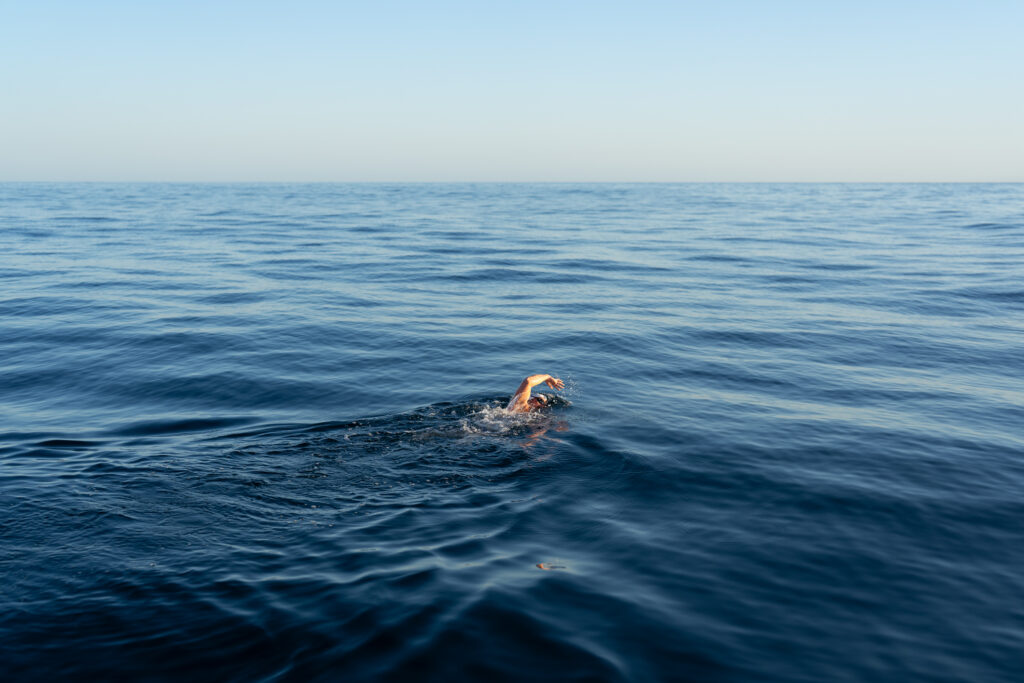
Jono’s swimming unassisted – that means togs, goggles, swim cap and earplugs. No wetsuit. It’s a staged swim – that means he’s stopping ashore to rest and refuel.
At the end of every swim shift the GPS position is logged and that’s where he starts his next shift from.
Jono’s distance covered and speed shown on the PredictWind tracker and in our daily swim leg updates reflect Jono’s actual distance swum – his real track through the ocean – not the shortest point-to-point route.
In open water swimming, the distance a swimmer actually swims is almost always longer than the distance that is officially recorded.
For records and comparisons, governing bodies measure the shortest possible straight-line distance between the start and finish points. This is why Jono’s official record will be shorter than what you see on the live tracker.
The rules of ‘unassisted swimming’ mean Jono doesn’t wear a tracking device on his body while swimming – the tracking device supplying the data feed is on the small support IRB which tracks right alongside Jono when he’s swimming.
For official records this data is also backed up with a second tracking device on the IRB, and another on the StabiX for cross referencing. Manual record keeping of every swim leg is also completed – an Observation Form is completed every 30 minutes noting general swimmer information, stroke rate, a photo and the GPS coordinates for additional record keep purposes.
The international bodies WOWSA and MSF tell us they’re not aware of any swims, done anywhere in the world, like this one.
Jono will have a core group of specialists around him across on-water and shore-based support. An amphibious StabiX boat, and an IRB beside him. On shore, a camper and caravan will be moving down the coast with the mission.
Jono will be coming ashore more than 120 times between swim shifts as the mission tracks down the whole east coast of the north island. Most of the time Jono will be pretty focussed on swimming, then just eating and sleeping before he gets back out there. Our boat and caravan will be pretty visible though and there’ll be someone from the team to say gidday if you see us. We’ll be stopping for a day in six places – Bay of Islands, Goat Island, Auckland, Tauranga, Gisborne and Napier.
Vessels are welcome but must stay well behind the support IRB. Unfortunately no swimmers please. Only members of the operations team who have been fully briefed can swim with Jono.
The operations team needs to keep eyes on Jono and anyone else in the water makes it much harder for them to keep Jono safe.
Please remember this is a world record attempt for unassisted swimming and we must ensure that is not compromised.
It’s more than a record-setting swim, it’s about igniting the country to get behind the need for a healthy thriving ocean! As Jono swims into Wellington, he will carry a clear call to action – to end bottom trawling. People will be able to show their support by adding their name to the call for action.
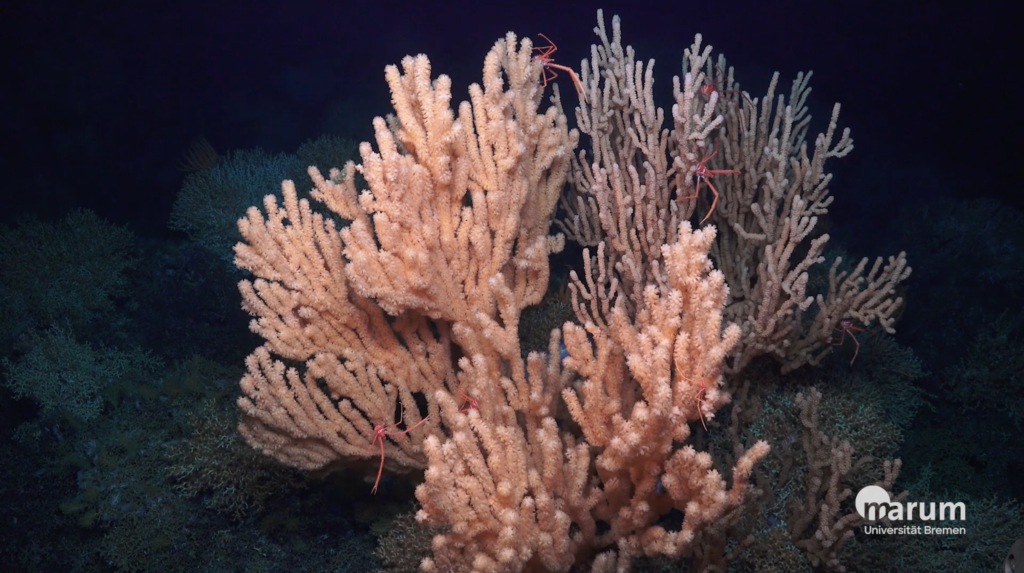
Bottom trawling drags heavy weighted nets across the seafloor – and destroys habitat, biodiversity and releases stored carbon. The first cab off the rank would be ending bottom trawling on our most critically important underwater spaces and the seamounts (sea mountains) that underpin the health of the ocean. Science is very clear – there is massive damage to these areas.
Aotearoa is home to one of the largest and most special ocean spaces on the planet. That’s a privilege and a responsibility. Our ocean is under huge strain, but we can choose to protect it. Moving away from bottom trawling is one of the most urgent actions we can take right now.
Swim4TheOcean follows a Caulerpa biosecurity protocol to help prevent the spread of this invasive species.
Live Ocean actively supports efforts to reduce the spread of exotic Caulerpa. As part of this, both Swim4TheOcean support vessels are checked daily by the operations team. Any Caulerpa found will be removed and destroyed in line with best practice.
People can get behind the call to end bottom trawling by signing our call to action.
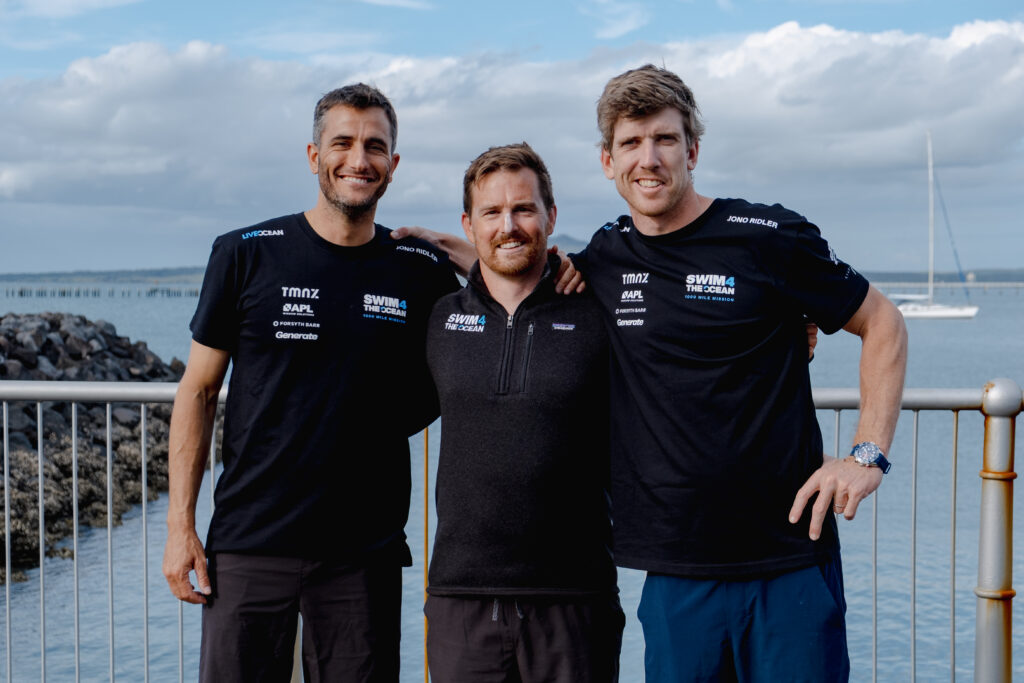
An incredible group of individuals and organisations who believe in what we’re doing are making this possible. You’ll see some of their names and logos on the caravan, the boat and our t-shirts – and there are many more who have provided equipment, provisions and services for free or discounted.
This page will have an epic live tracker, and @itsliveocean across social media will have coverage too.
35 year-old Jono Ridler from New Zealand is an ultra-marathon swimmer and a champion for a healthy ocean. In May 2023, Jono smashed the New Zealand record for the longest, unassisted, continuous open-water swim – swimming almost 100kms non-stop, no wetsuit, from Karaka Bay, Aotea Great Barrier Island to Campbells Bay, Auckland. It was a Swim4TheGulf; a swim done in partnership with Live Ocean to raise awareness for the declining health of Tīkapa Moana, the Hauraki Gulf.
Before then Jono had already knocked off the New Zealand Triple Crown of Open Water Swimming – made up of Cook Strait, Lake Taupō, and Foveaux Strait – one of only 14 to have done so.
He lives in Auckland with his wife and young daughter.
Live Ocean is a marine conservation foundation committed to scaling up action for the ocean. Founded by sailors and ocean champions, Peter Burling and Blair Tuke, the foundation scales up marine science, innovation and outreach to connect and ignite people around the role a healthy ocean plays in a healthy future.
Live Ocean partners with exceptional New Zealand marine scientists, innovators and communicators whose work has global implications for the protection of the ocean and the life in it. To have a healthy future, we must have a healthy ocean.
Massive thank you to the generous supporters who are making this mission possible.

We’re on a mission to create 1,000 postcards to protect the Hauraki Gulf and we need your help.
Send us your favourite ocean photo and a few words about what you love most about the Gulf, and together, we’ll spotlight why the Gulf deserves urgent protection – for us, and for future generations.