He calls on the Government to stop seamount bottom trawling, support a managed industry transition, and better protect ocean health for future generations.
“It’s time to protect our seamounts for good”
By Live Ocean
28 June '26
Read time: 3 min
Article Summary
Main Points
Opinion: Swim4TheOcean swimmer Jono Ridler argues that New Zealand must act now to end bottom trawling, starting with protecting vulnerable seamounts.
Drawing on his 1,367km Swim4TheOcean campaign, Ridler says growing public support and strong scientific evidence make the case for urgent action.
The Post
June 2026
By Jono Ridler
Bottom trawling is a hot topic right now – and that’s a good thing.
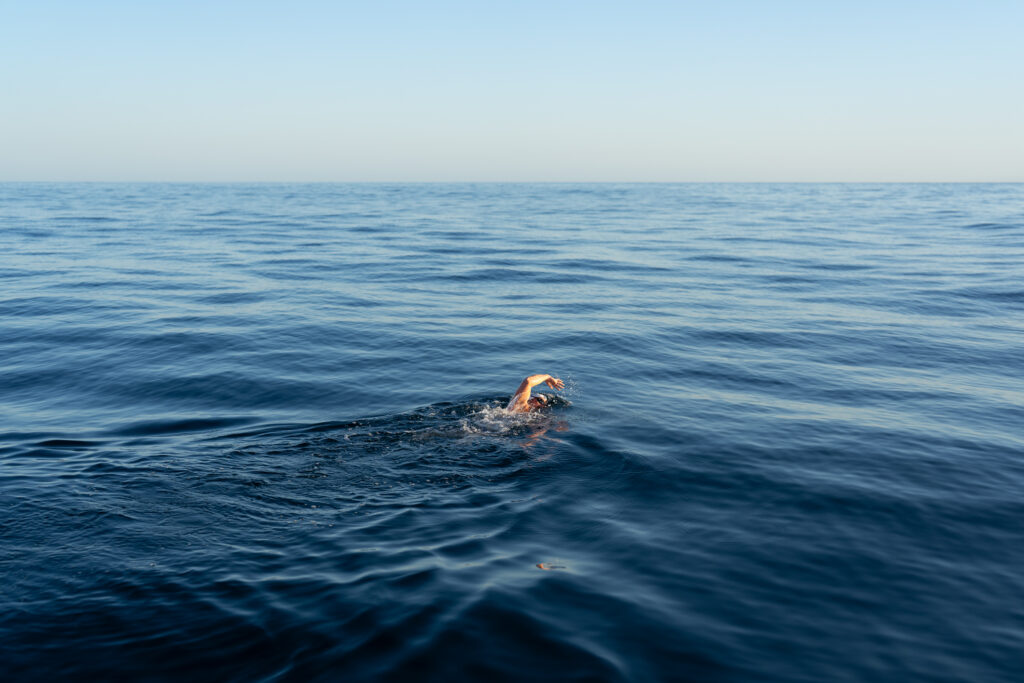
Earlier this year I swam the entire east coast of the North Island – 1,367km over 90 days, in just my togs, cap, goggles and earplugs. Every day, I jumped back in the ocean despite salt tongue, swarms of stinging jellyfish, rough water, nausea, relentless fatigue and constant hypothermia as the ocean temperature dropped the further south we pushed. But there was a good reason to keep going.
With Live Ocean alongside me, Swim4TheOcean was about bringing ocean health into the national conversation. Through this unprecedented swim, we called on decision-makers to phase out commercial bottom trawling, starting with seamounts – a call backed by the 73,647 people who signed our petition.
It is one of the largest ocean-related petitions presented to Parliament, building on decades of work by other organisations and individuals advocating for stronger ocean protection.
It’s nearly 90 days since I completed Swim4TheOcean, and we’re around 130 days from New Zealand’s general election. To hear our political leaders questioned and the future of bottom trawling debated is really pleasing. At a time where there are many other concerns, it’s great to have ocean health on the agenda. While the health of the ocean impacts all of us, it’s often too easy to ignore – what’s beneath the surface is out of sight and mind.
But these aren’t new problems. The practice of bottom trawling – towing large, weighted nets across the seafloor to catch fish in bulk – and its impact on marine ecosystems has been the subject of debate in New Zealand for decades. Recent polling showed New Zealanders’ concern has grown with bottom trawling now identified as the most significant threat to our marine environment.
The debate has gone on long enough. It’s time for action.
There are practical steps that can be taken now to reduce the impact of bottom trawling while supporting a managed transition for industry. That should begin with protecting seamounts.
These underwater mountains of the sea are the life-support systems of the ocean. They support rich biodiversity, act as spawning grounds and refuge for slow-growing species, and migratory waypoints for marine life. They’re among the most productive and ecologically important habitats in the ocean.
They are also among the most vulnerable.
Scientific evidence shows that bottom trawling causes long lasting and devastating damage to seamount ecosystems, including deep-sea corals, that may take decades or even centuries to recover, if at all. It’s clear why seamounts have become a focus of growing international concern.
New Zealand is party to global resolutions and commitments recognising the need to protect these ecosystems from destructive fishing practices. Yet, while many countries, including Chile, Australia, and Canada, are protecting seamounts in their own and international waters, New Zealand is falling behind.
We’re also the only country still issuing licences for bottom trawling on seamounts in the South Pacific high seas.
But there’s another reason seamounts are the right place to start.
Protecting them is both achievable and practical. The economic value derived from deep ocean seamount trawling represents a relatively small part of New Zealand’s seafood sector - less than 7% of relevant deepwater fisheries exports. Orange roughy is the main species caught on seamounts, and stock levels have fallen precipitously since commercial fishing started in the 1980s.
We’re calling on Government to take meaningful action now, while working alongside industry to plan for the future. Fishing is important to New Zealand. It supports jobs, communities and regional economies.
Our petition submission calls for an immediate end to permits allowing New Zealand vessels to bottom trawl seamounts on the South Pacific high seas.
It also calls for full protection for seamounts in New Zealand waters by the end of 2027 – aligned to international resolutions - and a managed and just transition is needed that supports innovation, provides certainty and helps the industry move away from bottom trawling entirely over time.
Together, these steps provide a practical pathway forward.
They acknowledge that fishing remains important to New Zealand’s economy and coastal communities, while also recognising that continuing to bottom trawl is increasingly difficult to justify given the scientific evidence, international commitments and public expectations.
Throughout my swim, I was reminded that New Zealanders care deeply about the ocean.
I met thousands of New Zealanders at campsites, on beaches and marae. I heard stories from coastal communities, had conversations with scientists, listened to iwi and elders, and heard the hopes of young people about the ocean they will inherit.
The same message came up time and time again. People are concerned about the degradation they see in the ocean. They understand that healthy fisheries depend on healthy ecosystems. And like me, they think we can do better.
The next step is clear. It’s time to stop talking. The time for Government action is now.
Protecting seamounts will not solve every challenge facing our ocean. But it is an achievable first step with real conservation impact. It’s backed by science, reflects growing international expectations, and supported by many New Zealanders.
The broader transition will take time. But meaningful change has to start somewhere.
The place to start is seamounts.


